Good acoustic comfort is rarely achieved by adding one sound-absorbing product at the end of a project. It depends on how the ceiling, walls, room volume, finishes, furniture, and building services work together.
For offices, schools, hotels, healthcare facilities, restaurants, airports, and other commercial interiors, the ceiling often provides the largest uninterrupted surface available for acoustic treatment. That makes ceiling design one of the most important opportunities to control reverberation and improve speech clarity.
USG ME offers multiple acoustic approaches, including modular acoustic ceiling tiles, monolithic systems, perforated gypsum ceilings, metal ceilings, and other specialty ceiling solutions. The right choice depends on how the room will be used and the level of acoustic performance required.
Here are five ceiling design decisions that can make a meaningful difference to acoustic comfort.
1. Match the Acoustic Ceiling to the Room’s Actual Sound Problem
The first decision is not which ceiling looks best. It is identifying the acoustic problem the room needs to solve. An acoustic ceiling is generally used to reduce reflected sound and control reverberation within a room. This can improve speech intelligibility, reduce the build-up of background noise, and make interiors feel more comfortable.
However, different spaces have different acoustic priorities.
A classroom may need clear speech between teachers and students. A restaurant may need to control overlapping conversations. An office may need to reduce general noise build-up without making the environment feel acoustically “dead.” A hotel lobby may need both sound control and a premium architectural appearance.
Before selecting a ceiling, define:
- How the room will be used
- Typical occupancy
- Main noise sources
- Required speech clarity
- Reverberation objectives
- Whether sound absorption, sound attenuation, or both are needed
- Other reflective surfaces within the room
An acoustical ceiling should therefore be selected around the room function rather than around a catalogue image.
Why this improves acoustic comfort?
When the ceiling system is matched to the real acoustic problem, designers can avoid both under-treating and over-treating the space.
2. Choose Acoustic Ceiling Tiles by Tested Performance, Not Appearance Alone
Perforation patterns, textures, and finishes influence ceiling appearance, but they should not be used as a shortcut for acoustic performance. USG ME's SoundBlock® gypsum ceiling range includes different round, square, and hexagonal perforation patterns with different acoustic characteristics. For example, SoundBlock® R12 is listed with NRC performance up to 0.85, while H11 can achieve up to NRC 0.90 depending on the selected product configuration.
This matters because two acoustic ceiling tiles may look similarly perforated but perform differently.
Architects should compare:
- NRC rating
- CAC where relevant
- Perforation pattern
- Open-area percentage
- Acoustic backing
- Tile thickness
- Edge detail
- Suspension system
- Ceiling coverage
A tile's visual pattern is part of the design, but its tested acoustic data should drive the final specification.
What does NRC tell you?
NRC, or Noise Reduction Coefficient, is used to indicate how much sound a material absorbs across selected frequencies. In simple terms, a higher NRC generally indicates greater sound absorption.
But NRC alone does not define the acoustic quality of a room. Coverage, room volume, furniture, walls, glazing, and other finishes also influence the result.
Why this improves acoustic comfort?
Choosing tiles using tested performance helps ensure that the ceiling provides enough sound absorption for the intended use rather than merely appearing acoustic.
3. Decide Whether Acoustic Ceiling Panels Should Be Modular, Monolithic, or Perforated
The format of the ceiling affects both acoustics and architectural character. Acoustic ceiling panels can be installed as modular tiles, perforated boards, monolithic systems, baffles, or other suspended elements. Each approach interacts differently with the room.
Modular acoustic ceilings
Modular tiles provide repeatable coverage and can make service access easier. USG ME's SoundBlock® range includes modular gypsum ceiling tiles with multiple perforation patterns and acoustic options. Individual systems are available in sizes including 600 x 600 mm and 600 x 1200 mm, depending on the product.
Modular systems can work well in:
- Offices
- Classrooms
- Healthcare environments
- Retail areas
- Institutional buildings
Monolithic acoustic ceilings
Monolithic ceilings create a smoother, more continuous appearance while still providing acoustic absorption. USG ME's MAC system can achieve acoustic performance up to NRC 0.90, while Monosilent can reach up to NRC 0.95 and CAC 43.
These systems are useful where the design calls for:
- Seamless ceilings
- Premium interiors
- Hotels
- Lobbies
- Boardrooms
- Conference rooms
- Museums
Perforated gypsum ceilings
Perforated gypsum board ceilings create a visible pattern while allowing sound to interact with acoustic material behind the surface. USG ME's Skyrock® Ecoblock range includes R6, R12, R8-15-20, and Q12 perforation configurations. The different patterns change both the visual appearance and the acoustic characteristics of the ceiling.
Why this improves acoustic comfort?
Selecting the right ceiling format allows architects to balance sound absorption, aesthetics, maintenance access, and ceiling geometry instead of forcing every room into the same solution.
4. Use Gypsum Ceiling Design and Metal Ceiling Systems Strategically
Material choice also affects how acoustic performance is achieved. A thoughtful gypsum ceiling design can combine seamless architecture with acoustic treatment. Perforated gypsum boards allow sound to pass through the visible surface toward acoustic backing, while monolithic systems can conceal the acoustic treatment behind a continuous finish.
USG ME's drywall ceiling range includes both approaches, allowing architects to choose between visible perforation and smooth monolithic surfaces. A metal ceiling can also provide effective sound absorption when perforated panels are combined with suitable acoustic backing.
Metal systems may be especially useful where the project also requires:
- Durability
- Washability
- Modular replacement
- Frequent ceiling access
- Custom colours or finishes
- Linear or geometric design
The important point is that neither gypsum nor metal is automatically more acoustic.
The result depends on:
- Perforation
- Backing material
- Ceiling coverage
- Plenum conditions
- Complete system configuration
When should gypsum be considered?
Gypsum can be a strong choice where the design requires:
- Seamless surfaces
- Integrated lighting
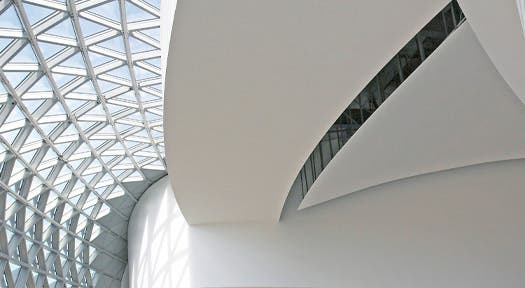
- Curved or shaped ceilings
- Perforated patterns
- Architectural continuity
When should metal be considered?
Metal can work well where:
- Panels need frequent access
- Durability is important
- Washability is required
- Modular replacement is useful
- A specialty visual effect is desired
Why this improves acoustic comfort?
Choosing the material according to both acoustic and operational requirements helps prevent a ceiling from solving one problem while creating another.
5. Coordinate Ceiling Coverage, Height, and MEP Services Before Finalizing the Design
Even a high-performing ceiling product may not improve acoustic comfort if there is too little active surface. Large reflective areas of glass, stone, tile, concrete, or untreated walls can continue to create reverberation even when part of the ceiling is acoustically treated.
Ceiling coverage should therefore be considered alongside:
- Room volume
- Ceiling height
- Hard wall surfaces
- Flooring
- Furniture
- Occupancy
- Acoustic target
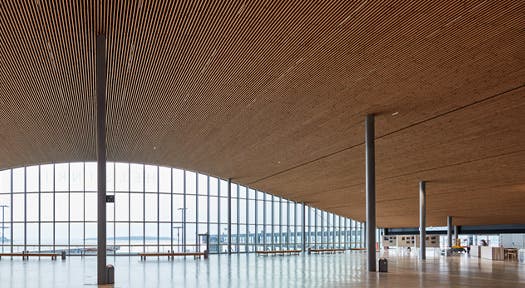
This is especially important in large-volume interiors such as atriums, airports, restaurants, and lobbies.
Do not let MEP coordination reduce acoustic coverage
Lighting, diffusers, sprinklers, speakers, smoke detectors, cameras, and access panels all compete for space within the ceiling. If these services are coordinated too late, they can interrupt acoustic areas or reduce the amount of effective treatment.
This becomes more important with:
Perforated panels
Acoustic baffles
Feature ceilings
Linear systems
Large modular tiles
Architects should coordinate the reflected ceiling plan with the MEP layout before finalising acoustic coverage.
Consider ceiling height
High ceilings can increase room volume and allow sound to travel farther before being absorbed. In these conditions, a flat ceiling plane may not always be the only solution. Suspended baffles, canopies, or other acoustic elements can introduce additional absorbing surfaces closer to the occupied zone.
Why this improves acoustic comfort?
Acoustic performance comes from the amount and location of treatment, not just the product rating.
How Perforation Affects Acoustic Ceiling Performance
Perforation is one of the most visible elements of many acoustic ceiling systems, but its role is sometimes misunderstood. Perforated panels allow sound energy to pass through openings into acoustic backing or absorptive material behind the panel.
The final performance depends on:
- Hole size
- Hole shape
- Open-area percentage
- Pattern spacing
- Backing material
- Panel depth
- Plenum
- Overall system
USG ME's modular gypsum ceiling range includes round, square, and hexagonal perforations, while its drywall ceiling range includes several Skyrock® Ecoblock patterns. A larger open area does not automatically mean the ceiling will always perform better. The system should be selected according to tested acoustic data.
Acoustic Ceiling Design Checklist for Architects
Before approving the ceiling specification, confirm:
Acoustic Performance
- Room acoustic objective is defined
- NRC requirement is confirmed
- CAC is reviewed where relevant
- Acoustic coverage is sufficient
- Backing material is specified
Ceiling Design
- Ceiling type suits the room
- Material is appropriate
- Perforation pattern is approved
- Ceiling height is considered
- Modular or monolithic format is confirmed
Coordination
- Lighting is coordinated
- HVAC diffusers are positioned
- Sprinklers and detectors are integrated
- Access requirements are identified
- MEP services do not unnecessarily reduce acoustic coverage
Technical Review
- Product data sheets are checked
- Suspension system is compatible
- Fire-performance requirements are confirmed
- Installation method is understood
- Maintenance requirements are considered
A strong acoustic specification should resolve these issues before installation begins.
FAQs About Acoustic Ceiling Design
What Makes a Ceiling Acoustic?
An acoustic ceiling is designed to absorb sound and reduce reflections within a room. This may be achieved through perforations, acoustic backing, absorbent materials, or specialised monolithic finishes.
Are Acoustic Ceiling Tiles Good for Offices?
Yes. Acoustic tiles can help reduce reverberation and improve speech comfort in offices when the correct NRC, coverage, and ceiling configuration are specified.
Is a Gypsum Board Ceiling Good for Acoustics?
It can be. Perforated gypsum boards combined with acoustic backing can provide sound absorption, while monolithic acoustic gypsum systems can deliver a seamless finish with high acoustic performance.
Can Metal Ceilings Absorb Sound?
Yes. Perforated metal ceilings can absorb sound when used with suitable acoustic backing. The complete system configuration determines the actual performance.
Is a Higher NRC Always Better?
Not necessarily. A higher NRC means greater sound absorption, but the correct value depends on the room function, volume, coverage, and overall acoustic design.
Should Acoustic Ceilings Cover the Entire Room?
Not always. The amount of treatment depends on the room size, acoustic target, ceiling height, and other finishes. Some spaces may achieve the required result with partial ceiling coverage, baffles, or acoustic panels.
What Is the Difference Between an Acoustic and Acoustical Ceiling?
The terms are generally used interchangeably in construction and specification. Both describe ceiling systems designed to improve sound absorption or other acoustic characteristics within a space.